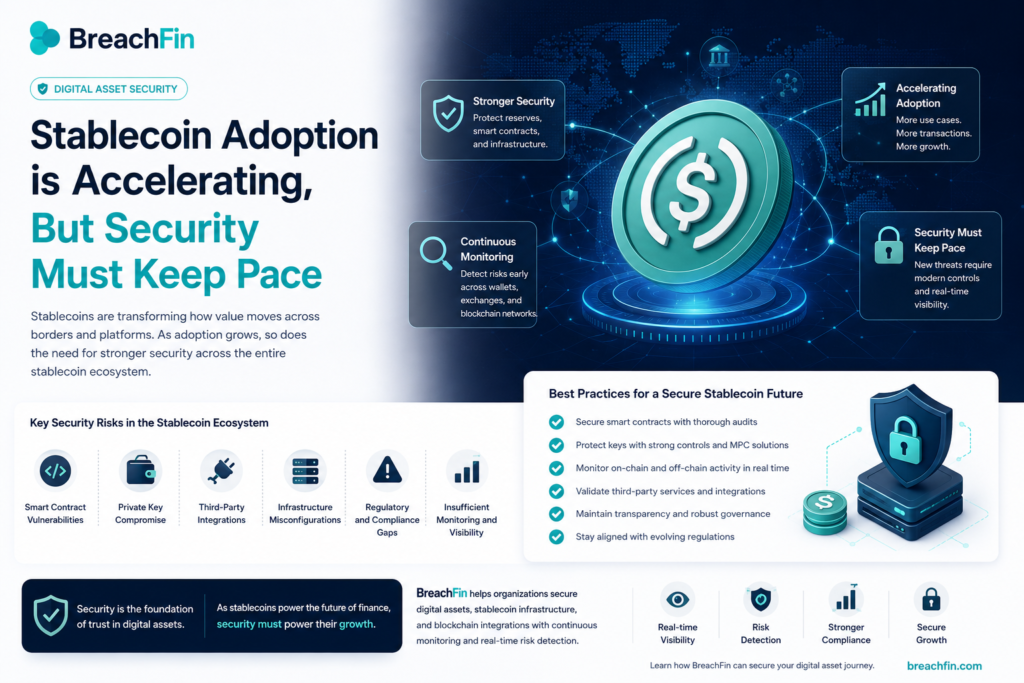
Stablecoin Adoption Is Accelerating — But Security Must Keep Pace

Stablecoins have rapidly evolved from a niche cryptocurrency tool into a growing component of global financial infrastructure. Financial institutions, fintech companies, payment processors, and merchants are increasingly exploring stablecoins for cross-border payments, treasury management, settlement, and digital commerce.

As adoption accelerates, organizations must address a critical question:

How secure is the infrastructure supporting stablecoin transactions?

What Are Stablecoins?

A stablecoin is a digital asset designed to maintain a stable value by being linked to an underlying asset, typically a fiat currency such as the U.S. dollar.

Unlike traditional cryptocurrencies that experience significant price volatility, stablecoins aim to provide predictable value while leveraging blockchain technology for faster and more efficient transfers.

Recent industry reports estimate the stablecoin market has surpassed $300 billion in circulation, with transaction volumes reaching trillions of dollars annually. Major payment providers, fintech firms, and financial institutions are actively integrating stablecoin capabilities into their platforms.

Why Organizations Are Adopting Stablecoins

Several factors are driving enterprise adoption:

Faster Cross-Border Payments

Traditional international transfers often involve multiple intermediaries and settlement delays. Stablecoins can facilitate near real-time settlement across jurisdictions.

Reduced Transaction Costs

Blockchain-based settlement can reduce reliance on legacy payment rails and associated processing fees.

Improved Treasury Operations

Organizations operating globally can use stablecoins for liquidity management, vendor payments, and fund transfers across regions.

24/7 Availability

Unlike traditional banking systems, blockchain networks operate continuously, enabling transactions outside business hours.

These advantages are attracting interest from banks, payment providers, and multinational organizations. Recent announcements from financial institutions and payment companies demonstrate increasing investment in stablecoin infrastructure.

The Security Challenges Behind Stablecoin Adoption

While stablecoins offer operational benefits, they introduce unique cybersecurity and compliance risks.

Smart Contract Vulnerabilities

Many stablecoins rely on smart contracts to manage issuance, redemption, and transaction processing.

A flaw in contract logic can result in:

  • Unauthorized token creation
  • Loss of funds
  • Transaction manipulation
  • Exploitation of administrative functions

Smart contract security reviews and independent audits should be considered essential controls.

Third-Party Supply Chain Risk

Stablecoin ecosystems often depend on:

  • Blockchain providers
  • Custodians
  • Exchanges
  • Wallet providers
  • Oracle services
  • Payment processors

Each third-party integration expands the attack surface.

Organizations should continuously monitor third-party scripts, APIs, and dependencies that interact with payment workflows.

Wallet Security

Compromised credentials remain one of the most common causes of digital asset theft.

Risks include:

  • Phishing attacks
  • Credential theft
  • Malware infections
  • Insecure key storage
  • Insider threats

Strong authentication controls, hardware security modules (HSMs), and key management procedures are essential.

Reserve and Custodial Risk

The stability of a stablecoin depends on the quality and transparency of its reserves.

Organizations should evaluate:

  • Reserve disclosures
  • Redemption mechanisms
  • Regulatory oversight
  • Independent attestations
  • Custodian security controls

Recent regulatory frameworks have increased emphasis on reserve transparency, liquidity management, and operational risk controls.

Compliance Considerations

As stablecoins become integrated into mainstream financial systems, compliance requirements are increasing.

Organizations must consider:

  • Anti-Money Laundering (AML)
  • Know Your Customer (KYC)
  • Sanctions screening
  • Data protection requirements
  • Financial reporting obligations
  • Vendor risk management

Security teams should work closely with legal and compliance departments to ensure digital asset initiatives align with evolving regulatory expectations.

Stablecoins and PCI DSS

While stablecoins are not payment cards, organizations that process both traditional card payments and digital assets must maintain visibility across their entire payment ecosystem.

Security teams should monitor:

  • Third-party scripts executing on payment pages
  • Unauthorized code changes
  • Digital skimming threats
  • Supply-chain compromises
  • External integrations introduced by wallet providers or payment vendors

These controls align with broader payment-page security requirements and help reduce exposure to client-side attacks.

What Security Leaders Should Do Now

Organizations evaluating stablecoin adoption should focus on:

  1. Conducting third-party risk assessments.
  2. Reviewing smart contract security controls.
  3. Implementing continuous monitoring for payment environments.
  4. Validating vendor security practices.
  5. Monitoring external scripts and dependencies.
  6. Establishing incident response procedures for digital asset environments.
  7. Maintaining visibility into all technologies interacting with payment workflows.

The Road Ahead

Stablecoins are increasingly moving from experimental technology into mainstream financial infrastructure. Market growth, regulatory developments, and enterprise adoption suggest they will continue playing a larger role in global payments and settlement systems.

However, widespread adoption will depend not only on innovation but also on security.

Organizations that implement strong governance, continuous monitoring, and proactive risk management will be best positioned to leverage the benefits of stablecoins while protecting their customers, data, and financial operations.

At BreachFin, we believe that visibility, monitoring, and supply-chain security are foundational requirements for any organization building trust in modern digital payment ecosystems.

Similar Posts

Leave a Reply

Your email address will not be published. Required fields are marked *