Trust Is the Foundation of Every Digital Asset Platform
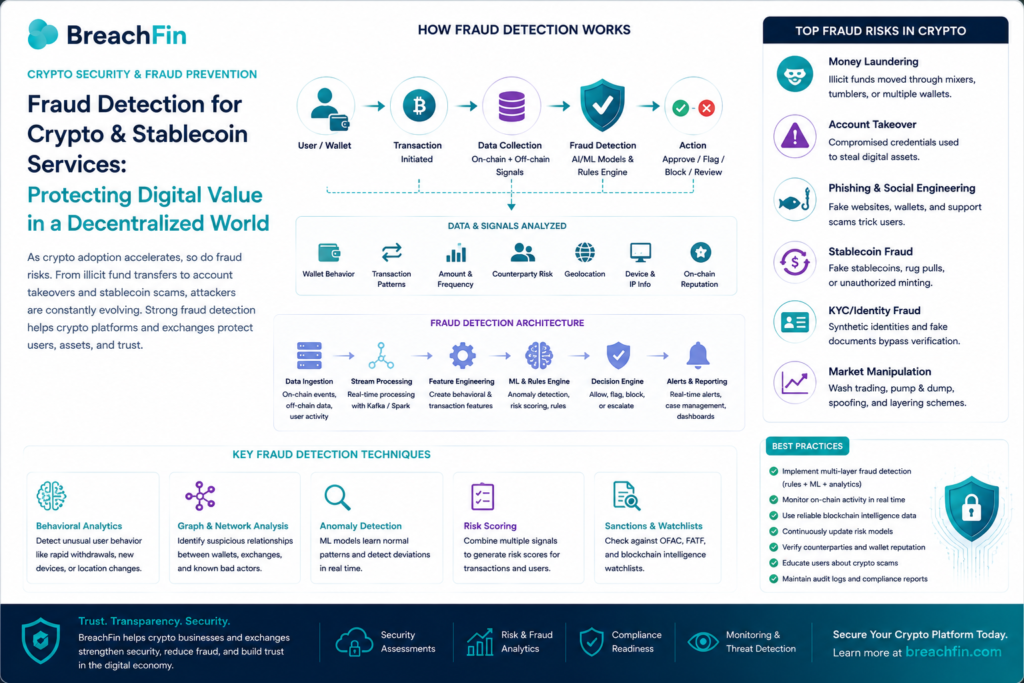
Cryptocurrency exchanges, stablecoin issuers, digital wallets, and fintech platforms process millions of transactions every day. As adoption grows, so do the tactics used by cybercriminals.
Account takeovers, wallet theft, phishing campaigns, money laundering, fake stablecoins, API abuse, and smart contract attacks have become daily challenges for digital asset businesses.
Unlike traditional banking, blockchain transactions are often irreversible. Once funds leave a wallet, recovering them can be nearly impossible.
That means security teams need visibility before fraud happens—not after.
The Modern Fraud Challenge
Today’s attackers don’t rely on a single technique.
They combine:
- Stolen credentials
- API abuse
- Compromised wallets
- Automated bots
- Social engineering
- Smart contract exploits
- Cross-chain laundering
- AI-powered phishing
Traditional monitoring tools often generate alerts only after suspicious transactions have already occurred.
Organizations need continuous intelligence that identifies abnormal behavior before assets are transferred.
How BreachFin Helps Protect Digital Asset Platforms
Rather than relying on isolated security tools, BreachFin provides continuous visibility across your digital asset ecosystem.
Continuous Transaction Risk Monitoring
Every transaction should be evaluated using multiple security signals.
BreachFin helps identify:
- Unusual transaction sizes
- Abnormal withdrawal behavior
- High-risk destinations
- Suspicious transaction velocity
- Geographic anomalies
- Behavioral deviations
Instead of static rules, organizations gain continuous insight into transaction risk.
Wallet Reputation Intelligence
Not every wallet should be trusted.
BreachFin helps organizations evaluate wallet interactions by identifying connections with:
- Known scam wallets
- Sanctioned entities
- Fraud databases
- High-risk blockchain addresses
- Newly created wallets
- Suspicious transaction histories
This enables security teams to make more informed decisions before approving high-risk transfers.
API Security Monitoring
Modern exchanges expose numerous APIs for:
- Trading
- Deposits
- Withdrawals
- Wallet management
- Account services
Compromised APIs often become the fastest path to fraud.
BreachFin helps organizations monitor APIs for:
- Unauthorized access attempts
- Authentication failures
- Suspicious API usage
- Token abuse
- Excessive requests
- Configuration weaknesses
This improves visibility into one of the most critical attack surfaces.
Client-Side Protection
Many attacks begin before a transaction reaches your backend systems.
Malicious JavaScript, browser extensions, and compromised third-party scripts can manipulate payment forms or steal customer credentials.
BreachFin continuously monitors browser activity to detect:
- Unauthorized script changes
- Suspicious third-party code
- Payment page tampering
- Browser-based attacks
Protecting the client side strengthens the first line of defense.
Behavioral Analytics
Every customer has unique usage patterns.
BreachFin identifies behavioral anomalies such as:
- Logins from unfamiliar devices
- Impossible travel scenarios
- Sudden withdrawal spikes
- New wallet destinations
- Unusual trading activity
- Abnormal session behavior
Behavioral analysis helps detect compromised accounts even when valid credentials are used.
Cloud Security Visibility
Digital asset platforms often operate across AWS, Azure, or hybrid cloud environments.
BreachFin helps identify:
- Cloud misconfigurations
- Excessive IAM permissions
- Exposed storage
- Insecure APIs
- Configuration drift
- Weak security controls
Reducing infrastructure risk strengthens the overall security posture.
Compliance Readiness
Security is closely tied to compliance.
BreachFin helps organizations strengthen readiness for industry frameworks by improving visibility into:
- Security monitoring
- Access controls
- Audit logging
- API protection
- Client-side security
- Continuous risk assessment
A proactive security posture simplifies regulatory audits and demonstrates strong operational governance.
Why Continuous Monitoring Matters
Fraud evolves every day.
Attackers change wallets.
They rotate infrastructure.
They automate attacks.
Static security controls quickly become outdated.
Continuous monitoring allows organizations to identify suspicious activity earlier, investigate faster, and reduce potential financial loss before incidents escalate.
Why Organizations Choose BreachFin
Digital asset businesses require more than alerts—they need actionable visibility.
BreachFin helps organizations:
- Strengthen fraud detection capabilities
- Improve API security visibility
- Protect client-side applications
- Reduce cloud security risks
- Monitor transaction behavior continuously
- Improve compliance readiness
- Support secure digital asset operations
Security should evolve as quickly as the threats targeting modern financial platforms.
Final Thoughts
The digital asset economy continues to grow, but so do the risks facing exchanges, stablecoin platforms, custodians, and fintech providers. Protecting customer assets requires more than traditional cybersecurity—it requires continuous visibility across transactions, APIs, cloud infrastructure, and browser-based interactions.
BreachFin helps organizations stay ahead of emerging threats by providing proactive security monitoring, stronger fraud detection capabilities, and actionable insights that reduce risk before fraud occurs.
As digital finance evolves, organizations that invest in continuous security will be better positioned to earn customer trust, meet regulatory expectations, and build resilient financial platforms.