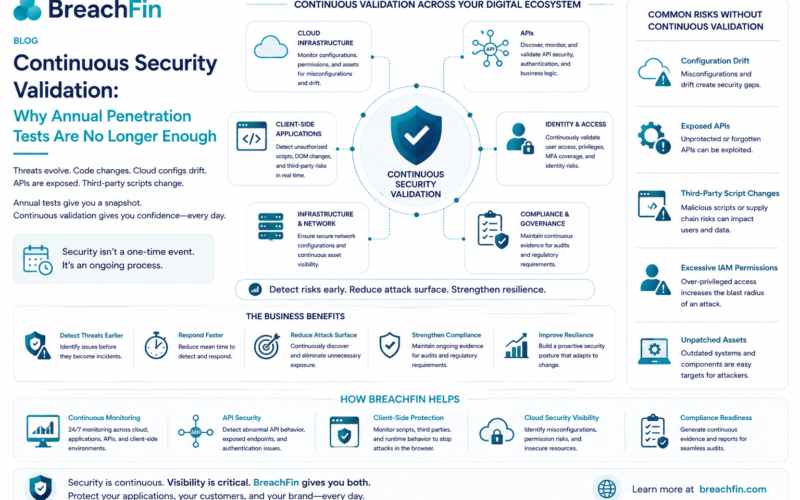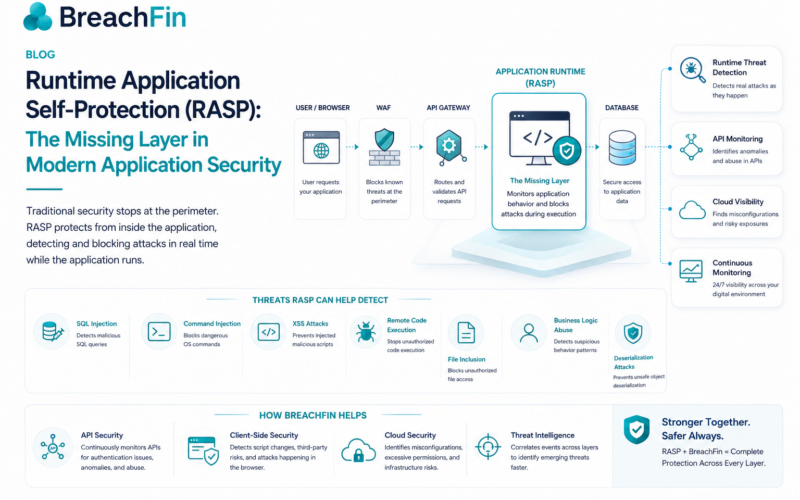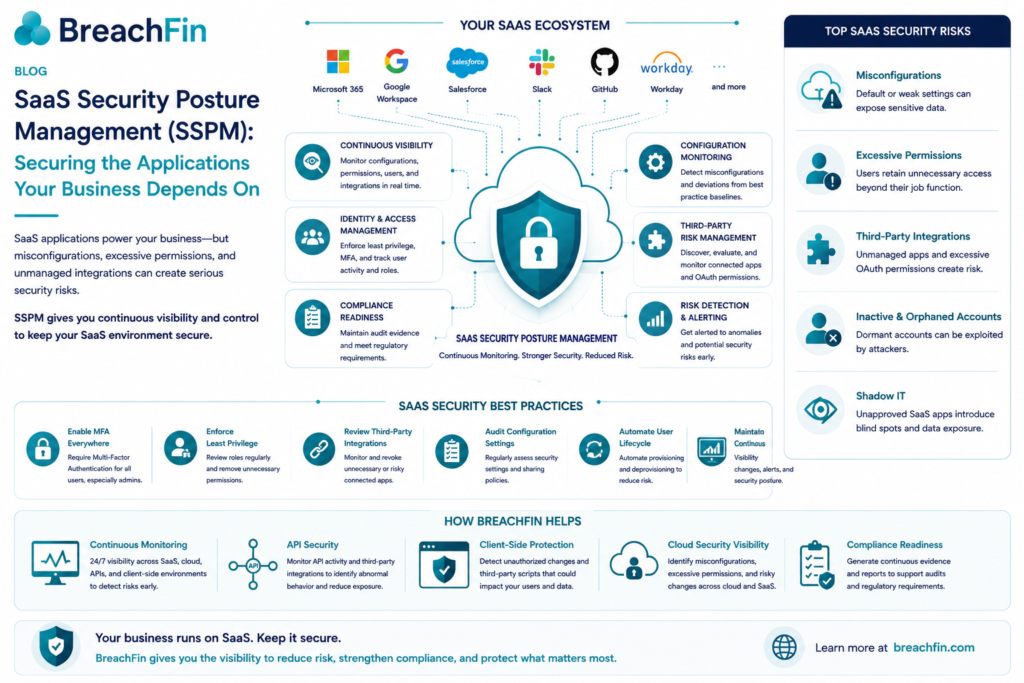
Modern organizations rely on dozens—or even hundreds—of Software-as-a-Service (SaaS) applications to run their businesses. Microsoft 365, Google Workspace, Salesforce, Slack, GitHub, ServiceNow, Zoom, Workday, and many others have become essential to daily operations.
While these platforms reduce the burden of managing infrastructure, they also introduce new security challenges. Misconfigured settings, excessive permissions, stale user accounts, and third-party integrations can create security gaps that attackers are quick to exploit.
This is where SaaS Security Posture Management (SSPM) plays a critical role.
Rather than focusing solely on infrastructure, SSPM helps organizations continuously monitor and improve the security posture of the SaaS applications they depend on every day.
What Is SaaS Security Posture Management?
SaaS Security Posture Management is the continuous process of assessing, monitoring, and improving the security configuration of SaaS applications.
An SSPM solution helps security teams answer questions such as:
- Are security settings configured according to best practices?
- Are users protected with Multi-Factor Authentication (MFA)?
- Which third-party applications have access to sensitive business data?
- Are there inactive or orphaned accounts?
- Which users have excessive privileges?
- Are audit logs enabled?
- Has the application’s security posture changed?
Instead of relying on periodic reviews, SSPM provides ongoing visibility into SaaS environments.
Why SaaS Security Matters
Organizations increasingly store their most valuable assets in SaaS platforms, including:
- Customer information
- Financial records
- Source code
- Intellectual property
- Employee data
- Contracts
- Payment information
- Internal communications
If these applications are not properly secured, attackers may gain access without ever compromising traditional infrastructure.
Common SaaS Security Risks
Misconfigured Security Settings
Default configurations often prioritize ease of use over security.
Examples include:
- Public file sharing
- Weak password policies
- Disabled MFA
- Excessive external collaboration
- Missing conditional access policies
Continuous monitoring helps identify these issues before they become incidents.
Excessive User Permissions
Employees often accumulate permissions over time as their roles change.
Without regular reviews, users may retain unnecessary administrative access long after it is needed.
Applying the principle of least privilege reduces this risk.
Third-Party Application Integrations
Many SaaS platforms support integrations with external applications through APIs and OAuth permissions.
While these integrations improve productivity, they may also introduce security risks if they request excessive access or are no longer maintained.
Organizations should regularly review connected applications and revoke unnecessary access.
Shadow IT
Business units frequently adopt new SaaS tools without involving IT or security teams.
This “Shadow IT” can result in unmanaged applications storing sensitive information outside approved security controls.
Maintaining an inventory of SaaS applications is an important first step toward reducing risk.
Inactive and Orphaned Accounts
Accounts belonging to former employees, contractors, or temporary users may remain active if deprovisioning processes are incomplete.
These dormant accounts can become attractive targets for attackers seeking unauthorized access.
Regular account reviews help ensure only authorized users retain access.
Best Practices for SaaS Security
Organizations can strengthen their SaaS environments by implementing the following practices:
Enable Multi-Factor Authentication
Require MFA for all users, especially privileged accounts, to reduce the risk of credential-based attacks.
Enforce Least Privilege
Review user roles regularly and remove unnecessary administrative permissions.
Monitor Third-Party Integrations
Evaluate OAuth applications and connected services to ensure they request only the permissions they require.
Audit Security Configurations
Review security settings, sharing policies, and access controls on a recurring basis.
Automate User Lifecycle Management
Provision and deprovision accounts automatically to reduce the risk of orphaned identities.
Maintain Continuous Visibility
Security is not static. Ongoing monitoring helps detect configuration drift and policy changes as SaaS environments evolve.
SaaS Security and Compliance
Strong SaaS security practices support compliance efforts for:
- PCI DSS 4.0.1
- ISO/IEC 27001
- SOC 2
- NIST Cybersecurity Framework
- NIST SP 800-53
- CIS Controls
Continuous monitoring and evidence collection can simplify audits while helping organizations maintain a stronger security posture throughout the year.
How BreachFin Helps
Modern SaaS environments change constantly. New users, integrations, permissions, and configuration updates can introduce risk without warning.
BreachFin provides continuous visibility that helps organizations identify and reduce security risks across their digital ecosystem.
Continuous Monitoring
Detect changes to cloud services, SaaS applications, APIs, and client-side environments in real time.
Identity and Access Visibility
Identify excessive permissions, privileged accounts, and authentication anomalies that may increase organizational risk.
API Security Monitoring
Monitor API activity and third-party integrations to identify abnormal behavior and reduce exposure.
Client-Side Protection
Continuously monitor browser-based applications, third-party JavaScript, and runtime behavior to protect customer-facing services.
Compliance Readiness
Generate ongoing security evidence that supports regulatory requirements and demonstrates continuous monitoring practices.
The Future of SaaS Security
As organizations continue adopting cloud-first strategies, SaaS platforms will become an even more critical part of enterprise operations.
Traditional security models focused on network perimeters are no longer sufficient. Security teams need continuous visibility into identities, configurations, integrations, and user activity across every SaaS application.
Organizations that proactively manage their SaaS security posture can reduce risk, improve compliance, and strengthen resilience against evolving cyber threats.
Conclusion
SaaS applications have transformed the way organizations operate, but they also expand the attack surface. Misconfigurations, excessive permissions, unmanaged integrations, and dormant accounts can create opportunities for attackers if left unchecked.
SaaS Security Posture Management enables organizations to continuously assess and improve the security of their cloud applications rather than relying on periodic reviews.
At BreachFin, we believe security should extend beyond traditional infrastructure. Continuous monitoring across SaaS applications, cloud environments, APIs, and client-side applications provides organizations with the visibility needed to identify risks early, strengthen compliance, and protect critical business services in an increasingly cloud-driven world.