Every click on a modern website triggers dozens of JavaScript files behind the scenes. Payment processors, analytics platforms, live chat widgets, customer support tools, and marketing scripts all work together to create a seamless user experience. While these technologies improve functionality, they also introduce new security risks that many organizations overlook.
Traditional cybersecurity has focused on protecting servers, networks, and cloud infrastructure. Today, however, attackers are increasingly targeting the browser itself, where customers enter payment details, passwords, and personal information. Protecting the client side of web applications has become just as important as securing backend systems.
Why the Browser Has Become a Target
Cybercriminals understand that compromising a web server is no longer the only path to valuable data. Instead, they often target third-party JavaScript running in a user’s browser.
If a malicious script is injected into a website, it can:
- Capture payment card information
- Steal usernames and passwords
- Collect personally identifiable information (PII)
- Modify page content without authorization
- Redirect users to phishing websites
- Track sensitive user activity
Because these attacks happen inside the browser, they may leave little evidence on backend servers, making them difficult to detect with traditional security tools.
“Modern attackers don’t always attack your infrastructure—they attack the code your customers trust.”
The Hidden Risk of Third-Party Scripts
Most websites rely on external services to deliver functionality quickly. These services might include:
- Payment gateways
- Live chat platforms
- Analytics providers
- Marketing tools
- Social media integrations
- Customer support widgets
While these integrations save development time, each additional script expands the organization’s attack surface. A compromise affecting a trusted vendor can quickly impact every website using that service.
Organizations should regularly review every third-party script loaded by their websites and remove those that are no longer necessary.
Best Practices for Stronger Client-Side Security
Protecting browser-based applications requires continuous visibility rather than one-time assessments.
Organizations should:
- Maintain a complete inventory of JavaScript assets
- Continuously monitor script changes
- Remove unused third-party libraries
- Restrict trusted domains using Content Security Policy (CSP)
- Validate resource integrity whenever possible
- Review third-party vendors on a regular basis
- Investigate unexpected changes immediately
These controls significantly reduce the likelihood of unauthorized code executing in users’ browsers.
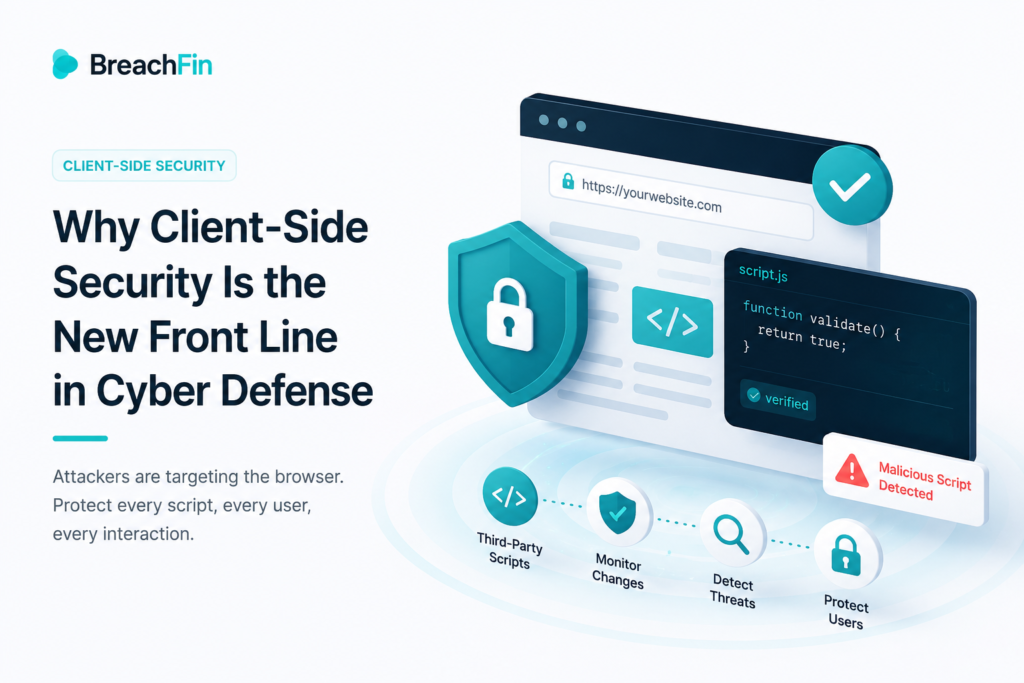
Three Steps to Improve Client-Side Security
1. Discover Your Scripts
Identify every JavaScript resource your website loads, including third-party dependencies.
2. Monitor Continuously
Track changes to scripts, domains, and dependencies so unexpected modifications are detected quickly.
3. Respond Quickly
Investigate unauthorized changes before they impact customers or expose sensitive information.
Security Is No Longer Just About the Server
As organizations continue adopting cloud services and third-party platforms, browser security must become part of every cybersecurity strategy.
Server security, firewalls, and endpoint protection remain essential, but they are only part of the picture. Organizations also need visibility into the code executing inside their customers’ browsers.
Building trust starts with protecting every interaction.