The Cloud Is Secure—Your Configuration May Not Be
Cloud computing has transformed the way organizations build, deploy, and scale applications. Businesses rely on cloud platforms for flexibility, performance, and cost efficiency.
However, one misconception continues to cause major security incidents: the cloud provider secures everything.
In reality, cloud providers secure the infrastructure, but customers are responsible for configuring their own environments correctly. A single misconfiguration can expose sensitive customer data, create compliance issues, and provide attackers with an easy path into critical systems.
Most cloud breaches today are not caused by sophisticated hacking techniques—they are caused by preventable configuration mistakes.
What Is a Cloud Misconfiguration?
A cloud misconfiguration occurs when cloud resources are deployed or managed with insecure settings that unintentionally expose systems or data.
These errors often happen because of:
- Human error
- Incorrect default settings
- Lack of visibility
- Rapid cloud deployments
- Poor access management
- Inconsistent security policies
Although simple, these mistakes can have significant consequences.
Common Cloud Misconfigurations
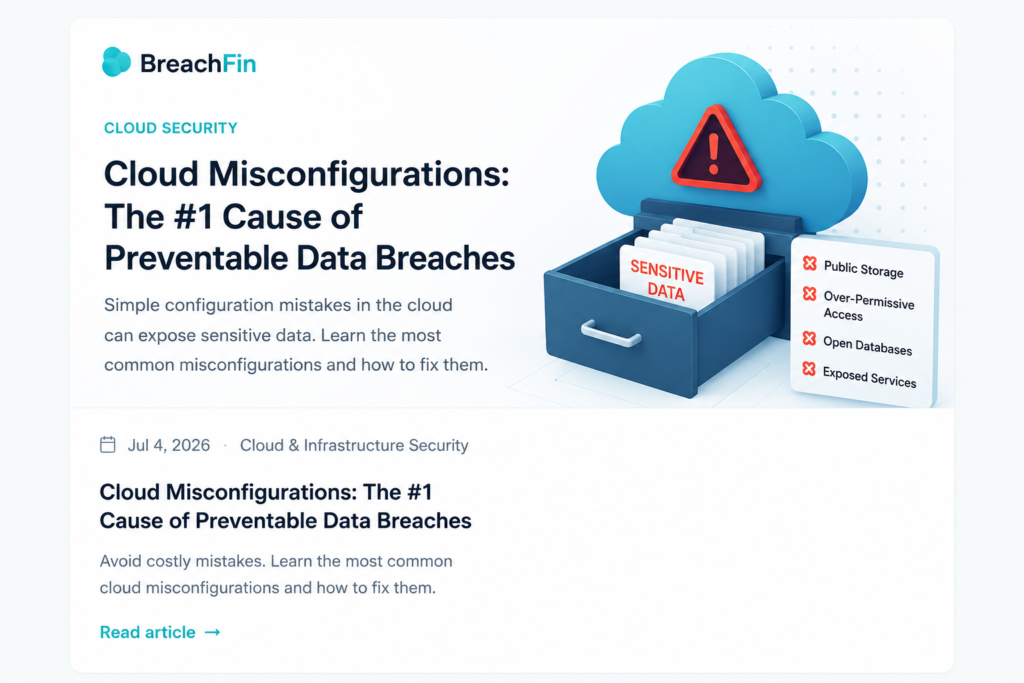
Public Storage Buckets
One of the most common cloud security issues is publicly accessible storage.
Files intended for internal use may become available to anyone on the internet due to incorrect permissions.
Exposed storage often contains:
- Customer records
- Financial documents
- Source code
- Database backups
- Internal reports
Routine permission reviews help prevent accidental exposure.
Over-Permissive IAM Policies
Identity and Access Management (IAM) controls who can access cloud resources.
Granting excessive permissions increases risk if an account is compromised.
Organizations should avoid:
- Administrator access for everyday users
- Wildcard permissions
- Shared administrative accounts
- Long-term credentials
Applying the principle of least privilege significantly reduces potential damage.
Hardcoded Credentials
Developers sometimes embed API keys, passwords, or cloud credentials directly into application code or configuration files.
If these credentials are exposed through source code repositories or compromised systems, attackers may gain direct access to cloud resources.
Instead, organizations should use secure secrets management solutions to store sensitive credentials.
Open Databases
Databases that lack proper authentication, encryption, or network restrictions are frequent targets for attackers.
Best practices include:
- Restricting public access
- Encrypting sensitive data
- Enabling strong authentication
- Regularly reviewing firewall rules
Exposed Services
Development tools, administrative interfaces, APIs, and remote management services should never be unnecessarily exposed to the public internet.
Unused services should be disabled, while required services should be protected with strong authentication and network controls.
Why Cloud Misconfigurations Matter
Cloud misconfigurations can result in:
- Data breaches
- Regulatory penalties
- Financial losses
- Business disruption
- Customer trust erosion
- Operational downtime
Even a single exposed storage bucket or unrestricted administrative account can lead to widespread compromise.
Best Practices for Securing Cloud Environments
Apply Least Privilege
Grant users and applications only the permissions required to perform their responsibilities.
Regularly review access rights and remove unnecessary privileges.
Continuously Monitor Configurations
Cloud environments change constantly.
Continuous monitoring helps identify:
- Newly exposed resources
- Configuration drift
- Unauthorized changes
- Security policy violations
- Excessive permissions
Early detection allows organizations to remediate issues before attackers discover them.
Encrypt Data Everywhere
Protect sensitive information both:
- At rest
- In transit
Encryption helps reduce the impact of unauthorized access while supporting regulatory compliance.
Automate Security Policies
Manual configuration reviews are difficult to maintain in dynamic cloud environments.
Infrastructure-as-Code, policy-as-code, and automated guardrails help ensure that cloud deployments consistently follow security best practices.
Conduct Regular Security Assessments
Organizations should routinely perform:
- Cloud security assessments
- Configuration reviews
- Vulnerability scans
- Access audits
- Compliance checks
Proactive assessments identify weaknesses before they become incidents.
Cloud Security Is a Shared Responsibility
Every major cloud provider operates under a shared responsibility model.
Generally:
Cloud Provider Responsibilities
- Physical data centers
- Hardware security
- Network infrastructure
- Hypervisor security
- Core cloud services
Customer Responsibilities
- User identities
- IAM policies
- Applications
- Operating systems
- Data protection
- Network configuration
- Storage permissions
- Encryption settings
Understanding this shared responsibility is critical to maintaining a secure cloud environment.
Building a Secure Cloud Strategy
Organizations should establish a cloud security program that includes:
- Secure configuration baselines
- Identity and access governance
- Continuous configuration monitoring
- Secrets management
- Encryption standards
- Automated compliance checks
- Incident response planning
- Regular security awareness training
Security should be integrated into every stage of the cloud lifecycle rather than treated as a one-time project.
Final Thoughts
Cloud technology offers tremendous flexibility and scalability, but its security depends heavily on how it is configured. Misconfigurations remain one of the leading causes of cloud-related data breaches because they are often overlooked until after an incident occurs.
By enforcing least-privilege access, continuously monitoring cloud environments, protecting sensitive credentials, automating security policies, and conducting regular assessments, organizations can dramatically reduce their risk while maintaining compliance and customer trust.
Strong cloud security begins with strong cloud configuration.