Compliance is no longer about passing an annual assessment. With PCI DSS 4.0.1, organizations are expected to continuously protect cardholder data and respond to security changes as they occur.
Modern payment pages rely on dozens of third-party JavaScript libraries, APIs, and cloud services. While these integrations improve customer experience, they also increase the attack surface and introduce new security risks.
Why Continuous Monitoring Matters
A payment page can change at any time. New scripts may be added, existing code can be modified, or third-party services may become compromised without warning.
Without continuous visibility, organizations may not detect these changes until after sensitive payment data has already been exposed.
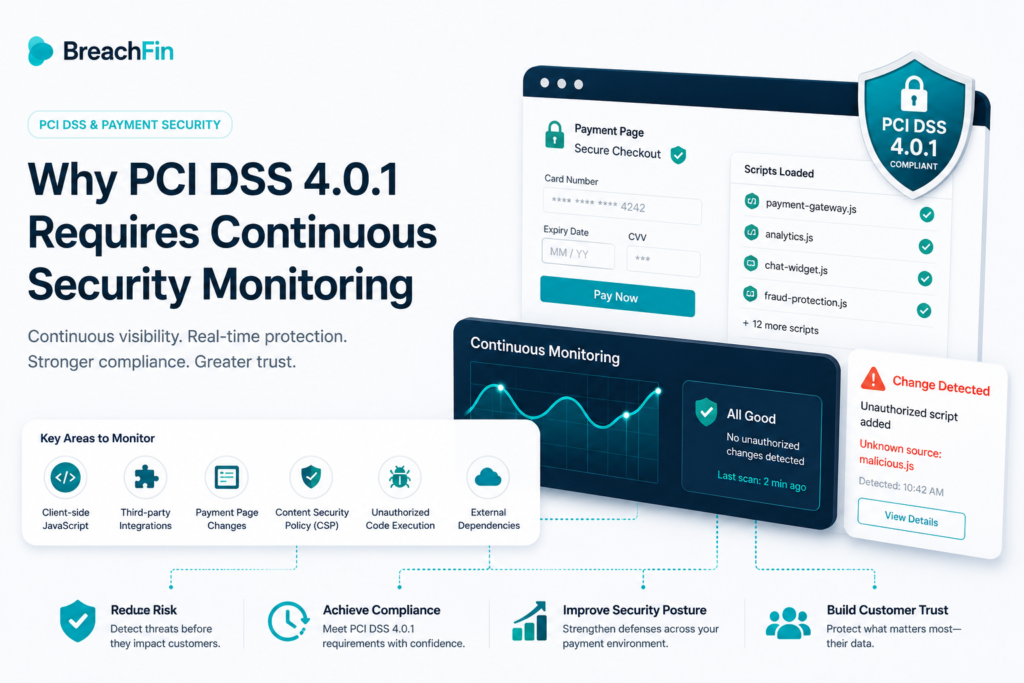
Key Areas to Monitor
Organizations should continuously monitor:
- Client-side JavaScript
- Third-party integrations
- Payment page changes
- Content Security Policy (CSP)
- Unauthorized code execution
- External dependencies
Continuous monitoring helps identify unexpected changes before they become security incidents.
Beyond Compliance
PCI DSS 4.0.1 is more than a compliance framework—it’s an opportunity to strengthen security. Organizations that continuously monitor their payment environments improve both compliance readiness and customer trust.
How BreachFin Helps
BreachFin provides continuous visibility into payment pages, client-side scripts, and third-party integrations. By detecting unauthorized changes in real time, security teams can respond faster and maintain a stronger security posture.
Final Thoughts
Cyber threats evolve every day. Security controls should evolve with them. Continuous monitoring gives organizations the visibility they need to protect payment environments while meeting the expectations of PCI DSS 4.0.1.